What VideoGen actually announced
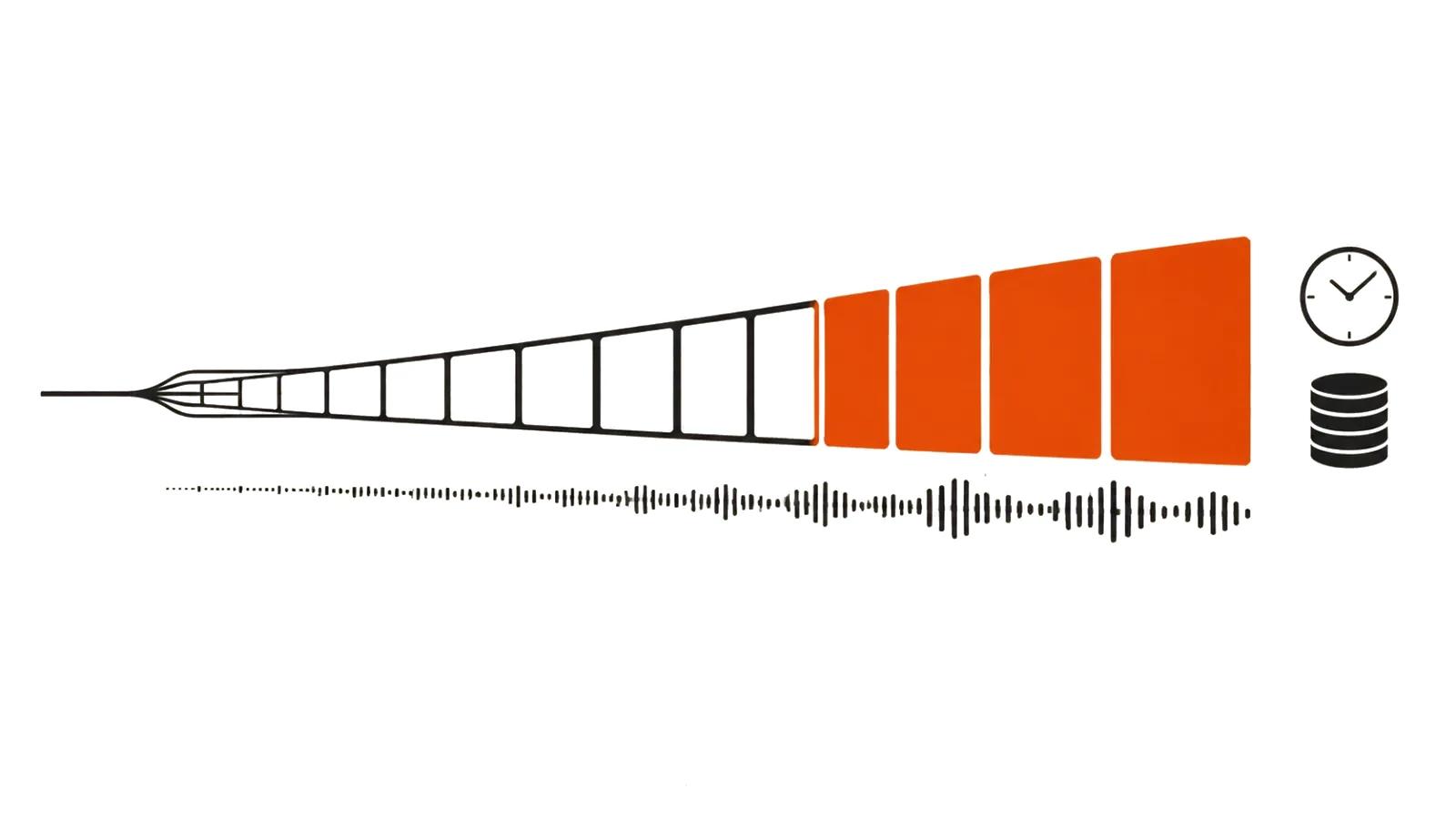
On October 19, 2026, VideoGen introduced Model 1 — the company's first in-house video model. The official page (https://videogen.io/model-1) promises a single prompt producing a finished multi-shot video up to ten minutes long, with screenplay, dialogue, shots, pacing, audio and assembly handled in one workflow.
That is a different order of magnitude from adding a few seconds. Seedance 2.5, per Morphic, runs up to 30 seconds in a single native pass; Model 1 reaches ten minutes by planning a sequence of shots and carrying context from one to the next.
Until now AI video production has meant generating short scenes and paying an editor to join them. Here the company claims the joining is part of the generation.
How one prompt becomes ten minutes
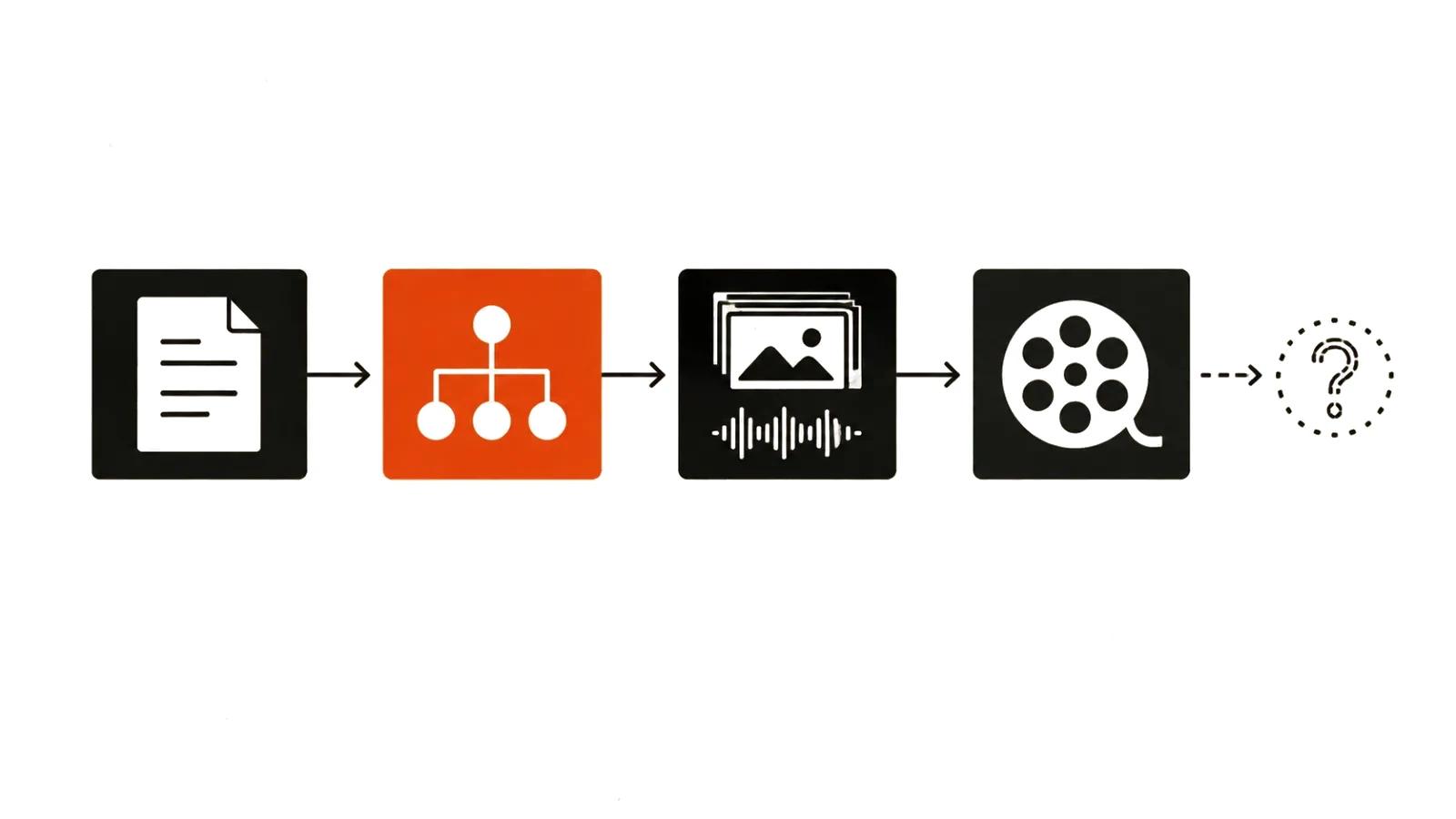
Work starts with a written brief and, optionally, visual references. Then a planning layer develops the screenplay, dialogue, shot list and pacing, and brings audio, video and assembly into one pass.
Speaking to AI Affairs, chief executive Anton Koenig described the machinery: an "AI thinking harness" with LLM nodes that improve the prompt, plus two sets of LLM judges — one that reasons, one that runs fast — scoring the output.
Continuity between shots comes from passing context in the model's latent space, according to Koenig. That is what underpins the promise of consistent characters, locations and story arc from the first shot to the last.
The weights run to tens of billions of parameters, he said — more than a single GPU can hold. Training covered realistic film, animation, cartoons, ads, social video and instructional footage. Several variants exist — realistic, anime, cinematic — and each request is routed to one at runtime.
For a side-by-side on duration, resolution and limits, see the guide to AI video models 2026.
The price claim, and what backs it
The headline figure is "50%+ less" than comparable models. The official page labels it plainly: expected cost based on internal validation, with final pricing and independent benchmarks still underway.
AI Affairs lists what the company counts as comparable: Seedance 2.0 and 2.5, Gemini Omni Flash 1.1 and Flux 3. The basis for the saving is anonymised patterns from VideoGen's own platform, whose tools the company says have produced more than ten million finished videos.
One technical detail from the same reporting: an experimental eight-step adapter cut the mean render time per clip by 58.2% against the same system's 28-step baseline. That is the company's own measurement, not a third-party test.
| Claim | What backs it as of October 19 |
|---|---|
| Up to 10 minutes from one prompt | demo films on the site; press had no access |
| 50%+ cheaper than comparable models | internal validation; no price list |
| Quality near 80% of Seedance 2.5 | the CEO's estimate; no benchmark |
| 58.2% faster rendering | internal measurement, eight-step adapter |
| Launch on October 20 | official page |
What has already been made with it
The site shows short pieces: Red Door, Hale, Extra Chair, Nol, The Bloom, Last Table, Flying to the Moon, and a run of 19–20 second spots — Not a Gadget, Sunday Reset, Three Moves.
The headline example is a complete four-and-a-half-minute claymation film generated from a single prompt with no editing. That is what the company is really selling: a finished story rather than an impressive frame.
This is where the line with handcrafted videos runs. A handcrafted piece is built shot by shot — up to a hundred generations per movement, selection, editing, music. Model 1 proposes the opposite order: get the whole thing, then fix it.
Who gets in, and when
A limited private-partner rollout begins on October 20, 2026. The same day opens applications for a $1 million pool of free credits.
The site's criteria: creative work and a viable distribution plan. Credits are distributed through the end of 2026, with each allocation sized to the project. AI Affairs adds that Koenig expects the pool to be given out over three to five months, judged on creativity, with a willingness to credit VideoGen counting in an applicant's favour.
Enterprise customers get a different route — running the weights on their own inference infrastructure. A marketing-oriented version, Koenig said, is still in training.
What the CEO says about quality
Koenig placed Model 1 slightly below ByteDance's Seedance 2.5, at close to 80% of its performance. No benchmark supports the number; the company cites internal validation and says third-party validation is coming.
AI Affairs states plainly that it was not given access to the model and could not verify the claims. That is normal for announcement day, and the 80% figure should be read as the company's position rather than a measured result.
One day of disagreement about dates
AI Affairs reports the announcement and the start of the limited rollout on October 19. The official VideoGen page names October 20, 2026, for both the rollout and the credit applications.
We follow the official page on timing, since it is the primary source for dates. The gap may come down to time zones, or to the publication preparing its piece in advance.
What it means if you are buying video
For now this is an announcement, not a tool: no price list, no press access, quality measured only by the CEO's words. Budgeting around Model 1 in October is premature.
The real shift is structural: a ten-minute piece stops being a separate project with an edit and becomes one generation plus revisions. If the promise holds, part of the budget moves out of post-production and into regenerating shots.
The practical call this month: short pieces with frame-by-frame acceptance are built on today's models, while longer narratives are still safer assembled segment by segment. In our own pricing, handcrafted videos start at $394 for up to 90 seconds with about a week of turnaround, and a series is priced per episode on the same basis.