How much does a video cost: the short answer
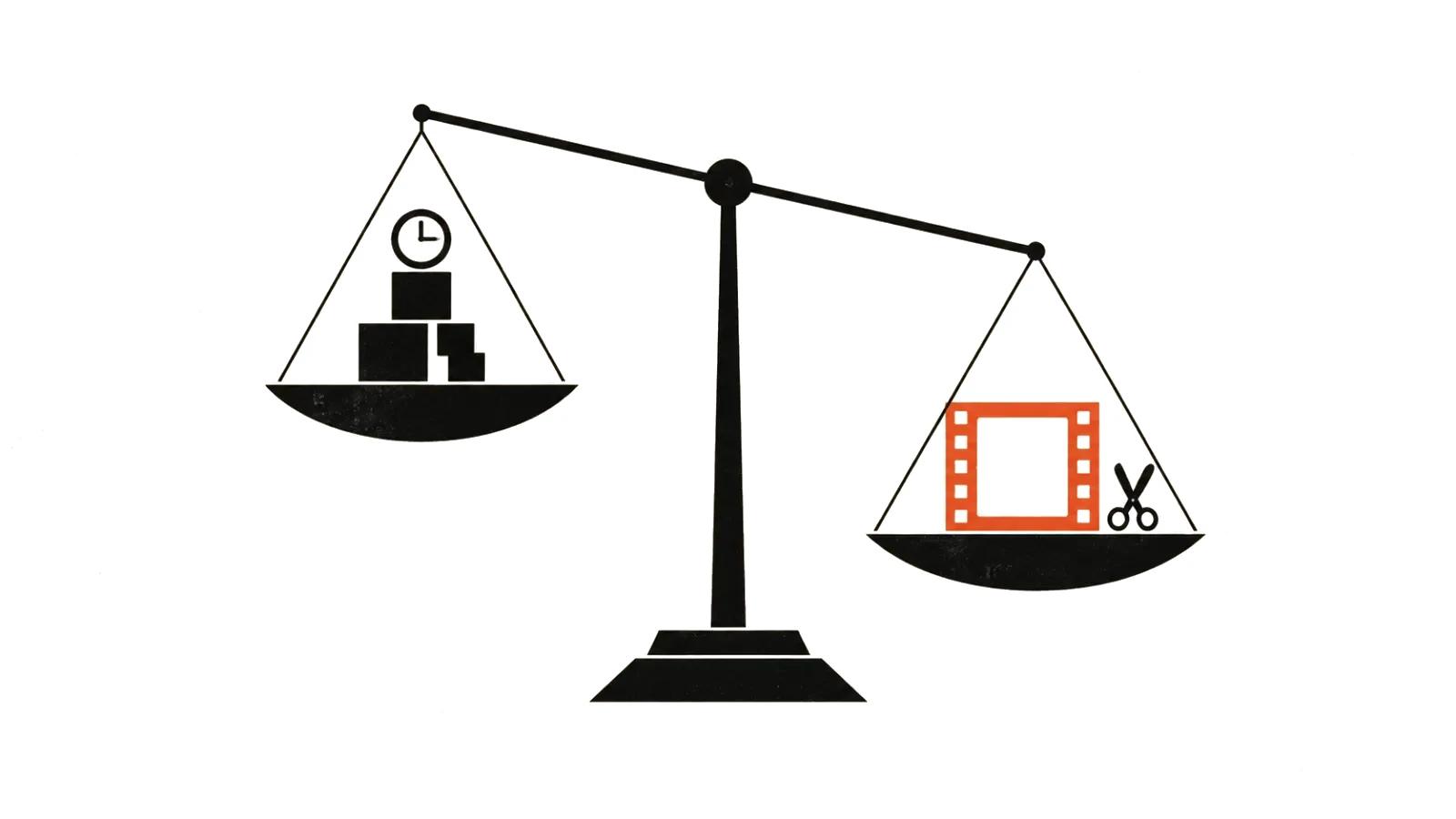
A video's price is the hours of the people who make it plus the cost of generation or filming. Length matters less than you would think: thirty seconds with three characters, dialogue and several locations costs more than two minutes of a single scene with a narrator.
We price in two ways. Handcrafted videos, where every scene is built and reviewed on its own, start from $394 per video up to 90 seconds, with a turnaround of about a week. Mass formats are priced per view at $2.47 CPM, and that figure already includes production and publishing.
Which route you need depends on the job. One brand film for your homepage and a stream of variants for feed testing are different quotes, even when the footage looks similar.
What goes into the cost of a video
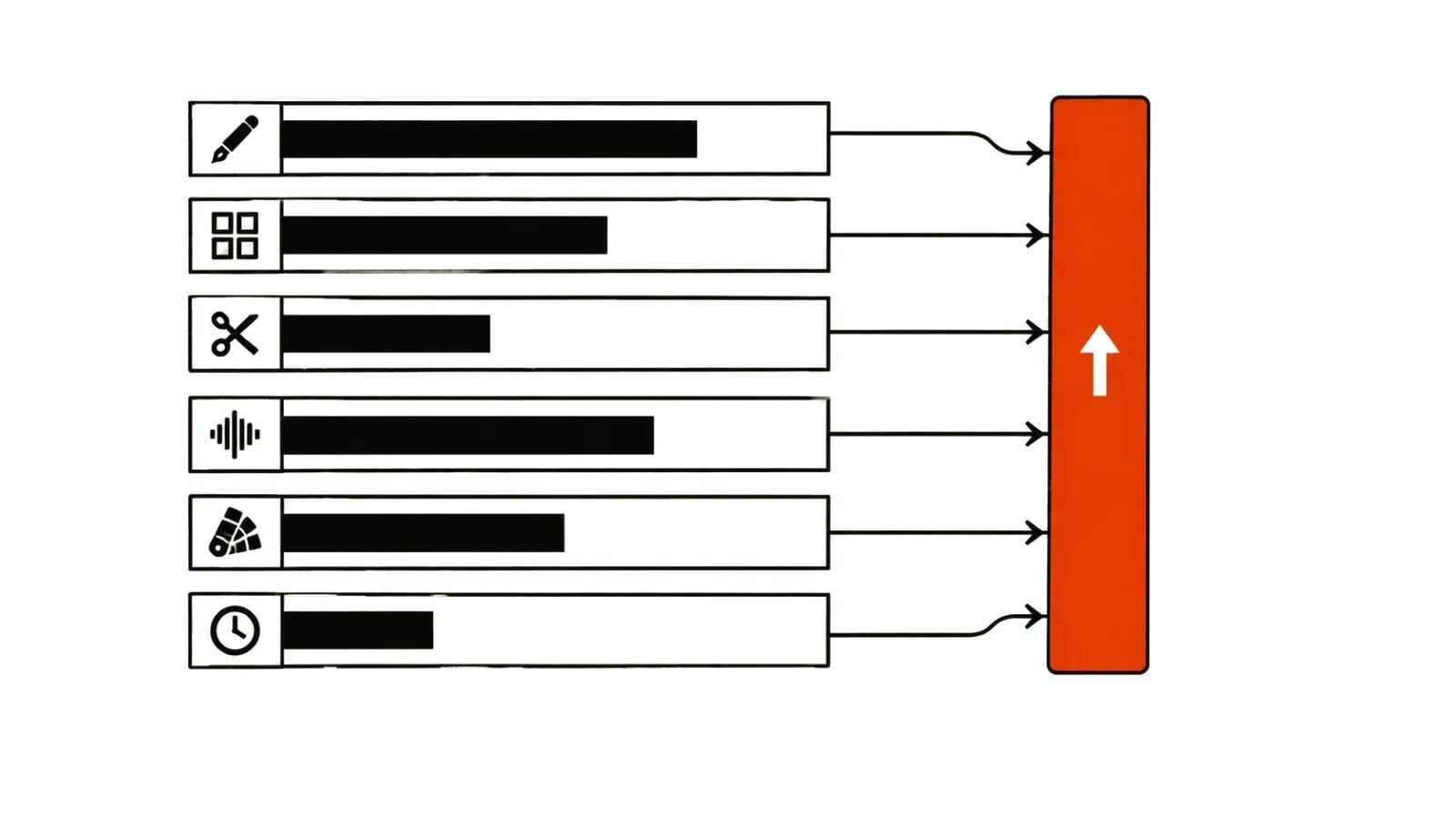
Almost any quote breaks down into six lines.
The most expensive line is rarely generation itself. It is visuals with hard constraints: the same hero in ten scenes, a product that must not be distorted, a face that has to stay recognizable. Fewer constraints, cheaper video.
| Line | What it covers | What drives it up |
|---|---|---|
| Script | idea, structure, copy, storyboard | number of scenes, approvals, legally sensitive topics |
| Visuals | AI generation or filming | characters that must match across scenes, complex motion |
| Edit | assembly, pacing, transitions, captions | number of cuts and formats |
| Sound | voiceover, music, effects | a live voice actor, several languages, lip sync |
| Revisions | approval rounds | a vague brief, new input after kickoff |
| Versions | durations, 9:16 and 16:9, languages | every platform with its own length and framing |
Handcrafted video: what you are paying for
A handcrafted video is work where a person makes a call on every frame. One movement can take up to a hundred generations before there is a take worth putting in the edit. Then come the edit, the music and the sound.
That is why handcrafted videos make sense when there is one video and it has to be precise: a homepage film, a product launch, a brand story, an episode of an animated series. A series is simple math: the per-video price times the number of episodes.
AI video production does not make this work free. It removes the shoot day, the location and the cast, but not the script, the selection and the edit, and those are most of the price. The same logic applies to vertical video ads: the expensive part is not the format but the number of versions that have to be reviewed and approved.
Mass formats: paying for views
When you need hundreds of videos rather than one, per-piece pricing stops making sense. Mass vertical videos work differently: the format is built once, then released in hundreds of unique variants across accounts, regions and languages.
In this model you pay for the outcome, views, not for files. The rate is $2.47 CPM with production and publishing included. A video that does not get watched does not end up on the invoice.
This route fits reach goals: a broad-demand product, a clear message, lots of tests. It is the wrong tool for a complex story built around one character; that calls for a handcrafted video.
What inflates a quote
A "make it look nice" brief. Without a goal and an audience, the first round goes into finding the idea, and you pay for it.
- New input after the script is approved. Every new scene means new generation and a new edit.
- Too many approvers. Five people with edit rights means five rounds of revisions.
- One cut for every platform. It gets trimmed later anyway, only at a higher cost.
- A precise face or product with no source material. If there are no product photos, someone has to produce them first.
How to lower the cost without lowering quality
First, set one goal. A video that has to sell, explain and entertain at once ends up longer and more expensive, and it works worse.
Second, name the platforms up front. If the video is going to the feed, the website and the ad account, the versions are planned in the script instead of being cut out afterwards.
Third, hand over source material: product shots, logo, brand colors, examples of videos you like and dislike. That saves a round of revisions, and revisions are money.
Fourth, separate the precise from the high-volume. Make the key video by hand and run the test variants as a stream.
Timelines
A handcrafted video up to 90 seconds takes about a week: script and storyboard, generation and selection, edit and sound, one or two revision rounds. A series moves faster per episode, because the characters and the style are already in place.
Mass formats start once the format is built. From there videos ship in batches, and the timeline is measured in publishing volume rather than in single videos.