What fal shipped
On October 19, 2026 fal announced FLUX 3 Max, a video model its research team post-trained on top of FLUX 3 in collaboration with Black Forest Labs. The release ran through PR Newswire (https://www.prnewswire.com/news-releases/fal-launches-flux-3-max-delivering-1-tier-image-to-video-quality-at-industry-leading-speeds-302913033.html), and the model has a page on fal (https://fal.ai/flux-3-max).
"Max" does not signal a new architecture. fal describes the work as specialised post-training, reinforcement learning and inference optimisation applied to an existing BFL foundation model: Black Forest Labs supplied the base, fal pushed quality and speed on its own infrastructure.
The unified API exposes three modes — text to video, image to video and keyframes to video. The headline leans on image to video, which is also the category the model entered in public comparisons.
What 1139 Elo actually measures
The number the launch is built around is 1,139 Elo on Artificial Analysis Video Arena in the image-to-video category. The evaluation is preliminary: 4,868 votes, and the release itself notes that confidence intervals overlap among the highest-ranked models.
That detail matters. Arena Elo summarises human preference — which clip people liked better — not physics, on-screen text or identity retention across shots. Overlapping intervals mean the gap to neighbouring entries is not statistically established.
Against the original FLUX 3, fal reports a 50-point gain: 1,089 to 1,139 Elo. Same arena, same kind of votes.
On the model page fal describes it as tied for first: Seedance 2.5 also scores 1,139 Elo in the same preliminary snapshot.
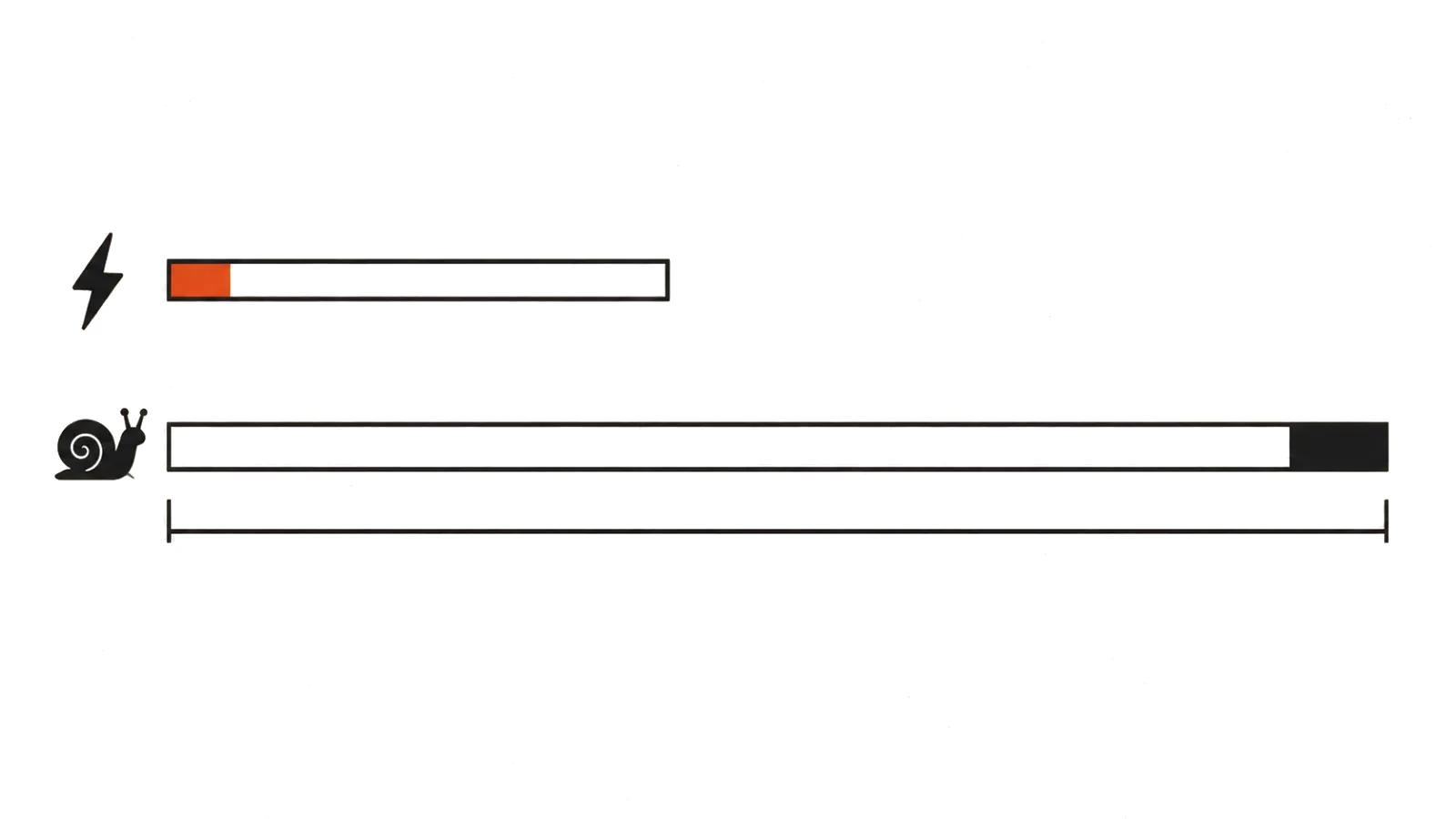
10.95 seconds against 277.80
The second claim is speed. fal says a ten-second clip renders in 10.95 seconds, while Seedance 2.5 needs 277.80 seconds for the same reported result. Hence "over 22×".
These are fal's own timings. fal's own model page quotes a different figure, 12.45 seconds, so "11 to 12 seconds" is fairer than any single number. There is no independent head-to-head on identical hardware, and the model documentation warns that settings and load affect completion time.
One more figure from the same passage: against standard FLUX 3, latency dropped from 126.44 to 10.95 seconds, or 11.5×.
Then the context that headlines drop. FLUX 3 Max is not the fastest model fal itself has shipped: the release notes that the earlier H3 Max produced a clip in 3.49 seconds in the same benchmark suite. The 22× refers to Seedance, not to an absolute record.
Why seconds change the job
The gap between ten seconds and four and a half minutes is not only a GPU bill. It changes how many iterations fit into a project: dozens of variants in an hour instead of a handful.
AI video production runs into exactly this bottleneck — the loop of adjusting a prompt, watching the result and fixing a shot. While a single generation takes minutes, a client and an editor discuss the storyboard. When it takes seconds, they discuss the output.
Image-to-video work follows the same logic. The product photo already exists; what is needed is a short clip to test. The cheaper the attempt, the more versions can go into vertical video ads, and the faster the winning one surfaces.
Price: what a second costs
fal's published rates, as reported by VentureBeat on October 19 (https://venturebeat.com/technology/fal-launches-flux-3-max-claiming-22-faster-ai-video-generation-than-seedance-2-5), are $0.17 per output second at 720p and $0.29 at 1080p with upscaling. A ten-second 720p clip costs about $1.70 at the regular rate.
A 75% launch discount runs until November 7: $0.0425 per second at 720p and $0.0725 at 1080p, or roughly $0.43 for ten seconds at 720p. Check the fal calculator before budgeting, since rates can change.
Clips run from 5 to 20 seconds, render at 720p with optional upscaling to 1080p, and audio can be switched on or off. A separate keyframes endpoint takes up to ten images along the sequence.
The model is closed: no weights, API access only. Anyone waiting for an open release of FLUX 3 Video is in the same position as before, and the earlier write-up on FLUX 3 open weights still applies.
What remains unproven
Three claims cannot be settled from the release. First, that 1,139 Elo is a stable result rather than a spike in a preliminary vote. Second, that the 22× gap survives contact with a specific user's setup, since it was measured on someone else's cluster. Third, that quality holds on long motion, hands and on-screen text, none of which arena voting isolates.
How to use it this week
A practical test: take five to ten of your own images, run them through image-to-video and compare on three things rather than on "looks good" — whether the product survives, whether the logo stays sharp, and whether the first two seconds carry enough motion.
Where the result has to be signed off frame by frame, handcrafted videos remain the safer route: from $394 per video up to 90 seconds, about a week. Automated runs are good for tests and volume, but they do not remove the selection step.