What the platform rules already tell you
YouTube's help centre splits video ads by length, and the difference there is structural.
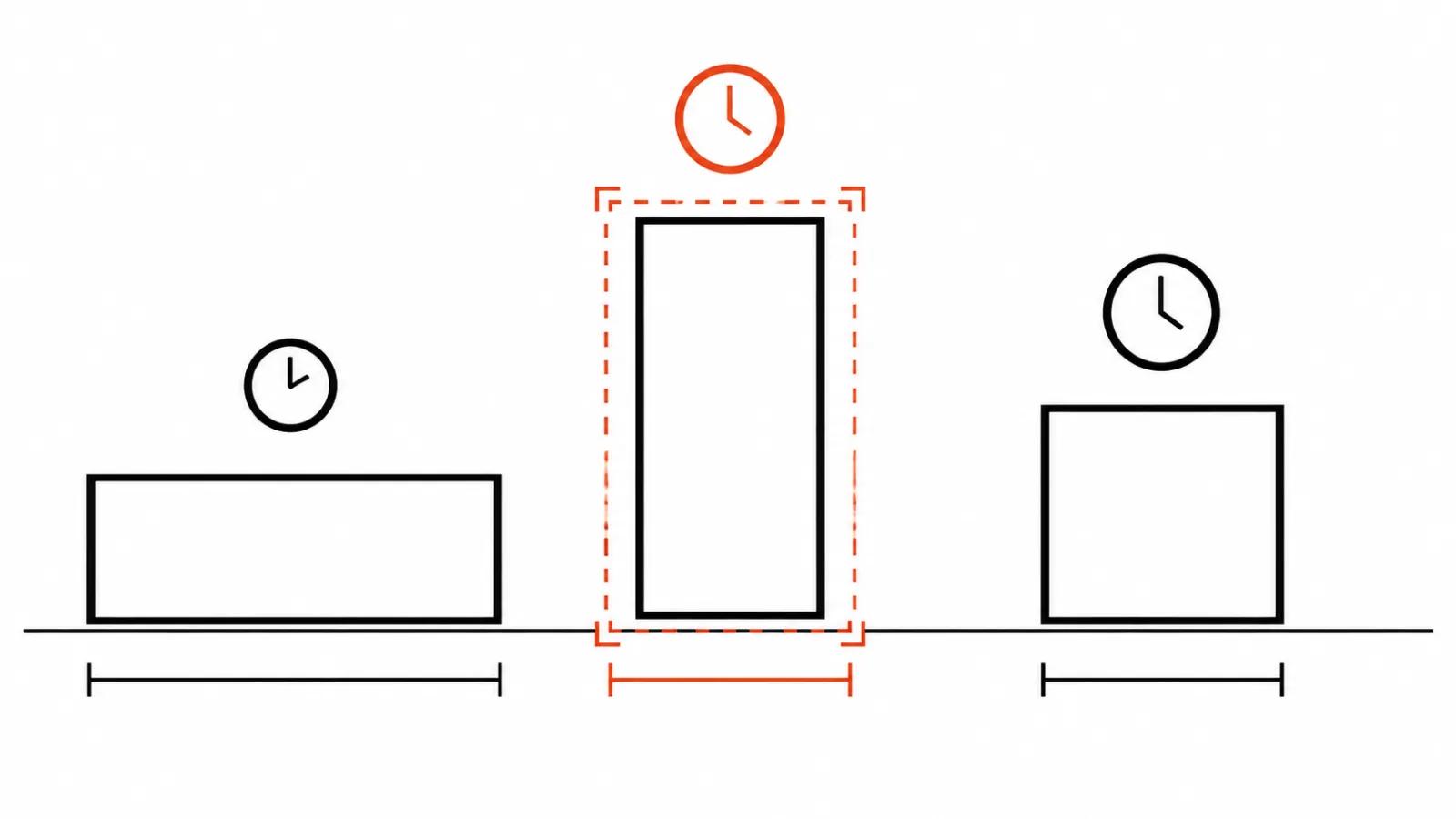
A bumper runs five to six seconds, plays before, during or after another video and cannot be skipped. A non-skippable in-stream ad runs fifteen to sixty seconds, depending on the campaign subtype. Skippable in-stream has no hard cap, with a recommendation to stay under three minutes.
Aspect ratios come on top: 16:9 horizontal, 9:16 vertical, 1:1 square. The recommended resolution is 1080p, and the file has to be uploaded to YouTube and set to public or unlisted.
Six seconds: one thought
Six seconds hold one thought and one action. A product, a face, a movement, a name.
I would put only what a viewer can repeat a minute later into that cut. If understanding needs a second shot, the version is not ready.
The usual mistake is squeezing three benefits and a logo into six seconds. The brand name belongs in the first seconds, while the viewer is still watching.
Production wise this is the cheapest format. One shot, one movement, no cuts. If the scene needs a second angle, it is not a six second scene.
Fifteen seconds: promise and proof
Fifteen seconds is promise plus evidence. Three seconds give a reason to keep watching, eight show that the promise is not empty, four close with an action.
A non-skippable in-stream placement means the viewer cannot leave early, and will not forgive filler. The same rule as a pitch deck applies: one claim, one demonstration, one conclusion.
Thirty seconds and beyond: when it still works
Half a minute survives in two cases: connected TV and an explanation of something complex. On a big screen the viewer has patience, and patience covers a short story.
Television versions sit in the same range, and half a minute is still a workable length there.
In a feed half a minute almost always loses. The viewer scrolls, and the middle of the ad never gets seen.
Why vertical rewrites the script
Vertical puts the person closer and removes the edges. A horizontal composition moved into 9:16 loses half its meaning: the product crosses the border, the text gets cropped.
The practical rule: if a video is needed in two ratios, shoot and generate two compositions. Reframing from horizontal to vertical rescues only scenes where the centre carries everything.
Platform interfaces add their own zones: captions, buttons, handles. Keep them in view during the final assembly, or the product name ends up under a button.
What happens to sound
Ads in a feed often start muted, and that changes the writing. The first line has to read as a caption.
Music is its own story. A track that fits the mood may not permit commercial use, and rights get checked before the edit.
A recorded narrator and a synthesised voice are equal here: both carry restrictions on paid placement, and those sit in the licence.
Captions deserve a check on a real phone screen. A line that looks tidy in the edit suite lands under a control bar in the hand.
Counting versions per placement
A minimal set for one campaign looks like this: six seconds vertical, fifteen seconds vertical, fifteen seconds horizontal for in-stream. Three versions, three scripts, one meaning.
Language and geography come next. Every version gets checked at the first frame: if two seconds do not explain what this is about, the version goes back.
AI video ads make this part cheaper. Rebuilding a version costs less than a new shoot, and hypotheses can be tested on live traffic. Short-form video at scale takes the same logic further: the version stops being a deliverable and becomes a template with slots.
The conclusion
Video ads start with a length and a ratio, and the script follows. One cut for every placement usually means a compromise in each, and the fix sits in planning, before the edit. AI video production shortens the gap between the two, because a second composition costs an evening, where a crew day costs a schedule.
Plan the versions in advance. Three versions around one meaning cost less than a universal one that gets remade.
And read the platform requirements before production. The help centre changes more often than the script.