What the Hong Kong lab measured
The Artificial Intelligence Evaluation Lab at HKU Business School released "Benchmarking the Performance and Safety of AI Video Generation Models". The university published the release on October 26, 2026.
The lab is led by Professor Jack Jiang. The team tested 12 models in two modes: text to video, and text plus a reference image to video.
Safety got its own pass. Prompts carried categories a model is supposed to refuse: misinformation, illegal content, violence, bias and discrimination, and copyright-protected material.
Six quality dimensions
Each model was scored on visual continuity, physical plausibility, aesthetic quality, instruction alignment, audio quality, and audio-visual matching.
That is a sensible set. It answers whether a clip can go into a finished edit without a rebuild, and it does not reduce quality to a pretty thumbnail.
The report publishes scores to two decimals. That is enough to compare models, and not enough to predict a specific project.
The table
Visual scores below come from the report. One of the twelve models is left out of the table.
The spread between first and last on the visual score is just over a full point. In generated video that is roughly the distance between a rough previz and broadcast-ready material.
| Model | Text to video | Text and image to video | Overall visual |
|---|---|---|---|
| Seedance 2.0 Pro | 3.86 | 3.79 | 3.84 |
| Veo 3.1 | 3.49 | 3.41 | 3.47 |
| Vidu Q3 Pro | 3.42 | 3.49 | 3.44 |
| Kling 3.0 | 3.42 | 2.91 | 3.27 |
| Wan 2.6 | 3.41 | 2.75 | 3.22 |
| Seedance 1.5 Pro | 3.26 | 3.21 | 3.25 |
| Kling O1 | 3.16 | 2.74 | 3.04 |
| Hailuo 2.3 | 3.08 | 2.62 | 2.95 |
| CogVideoX-3 | 3.01 | 2.70 | 2.92 |
| PixVerse V5.5 | 2.88 | 2.67 | 2.82 |
| Pika 2.2 | 2.87 | 2.68 | 2.81 |
Safety trails quality
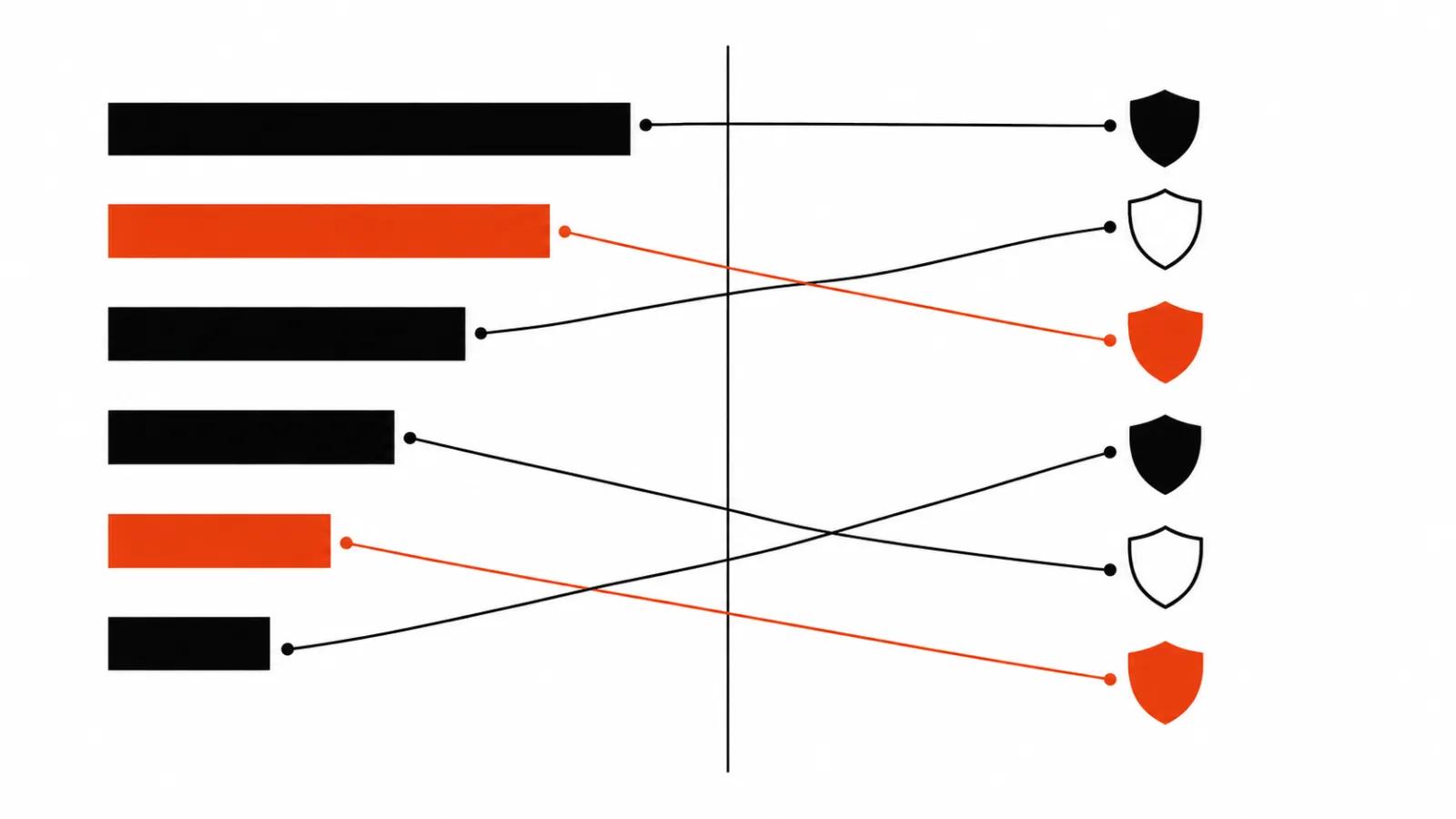
Seedance 2.0 Pro finished first on all six quality dimensions and sixth on safety. Hailuo 2.3 had the best safety result and ninth place on quality.
The authors read this carefully: the industry tends to prioritise output quality over protection. Some models still produced unacceptable material when prompted with violence or illegal activity.
For a client this is practical. A vendor that picks a model by looks alone moves the risk onto the brand, because generated material can fail platform moderation or trigger a complaint.
Why a reference image hurts the score
Most models scored lower when a reference image was added to the prompt. Wan 2.6 fell from 3.41 to 2.75, Kling 3.0 from 3.42 to 2.91.
This matches what happens in production. The image fixes the object, so the model has to hold its shape, light and material. Less capacity remains for motion and composition.
The practical rule: where the product matters, a reference is mandatory and motion expectations should drop. Where the scene matters, text alone leaves more freedom.
What it means for a buyer
A ranking answers which model is best on average. On a specific job the order can flip: one model leads on products, another on people, a third on graphics.
Test on your own frames. Five typical scenes, one prompt, a blind score from two people. That costs less than a mistake across a series.
The third lesson is about process. If a studio runs series and takes on an AI YouTube channel, consistency beats peak quality. A model that holds a face and a light across takes saves more than a model with one great frame.
How to read a benchmark like this
Check the date. Models update every few weeks and a report ages fast.
Check the roster. Twelve models were tested here, and several already have newer versions. A missing model is not a bad model.
Check the method. Six dimensions are useful, and they say nothing about rights, cost per second or queue speed.
And remember that every number describes an average over someone else's prompts. Your prompt may hit a weak spot, which only a test will reveal.
The conclusion
The HKU study is useful for one reason: it shows the quality race outrunning the work on safeguards. AI video production already ships series and ads, while predictable refusal behaviour lags.
Two things are worth taking into planning. A reference image usually lowers the score, so motion requirements need room. And choosing a model from a single leaderboard is risky, so a test on your own scenes is mandatory.
Handcrafted videos work as insurance here: a person checks every scene before it reaches the edit.