What an ad creative is
An ad creative is a specific embodiment of an advertising idea: a video, a still, a carousel, a line of text with an image. One campaign can hold a dozen creatives, each testing a hypothesis about what will stop a scroll.
The operative word is "testing". A creative exists as a bet — that this approach beats the last one — so it is judged by whether it earns attention and moves someone to act, not by how it looks in a deck.
In video advertising a creative is almost always shorter than people assume. The first two seconds decide whether the rest plays, which means the product and the point have to show up immediately rather than after a title card.
A creative is not the same as a spot
A spot is a format; a creative is content. The same creative can run as a 30-second spot, be cut into a six-second bumper, and repeat as a static card with a caption.
A spot usually tells a story: setup, development, resolution. A creative can be a single thought with no story at all — a close-up of the product, an unexpected motion, one precise line.
That changes the acceptance criteria. With a spot you ask whether the narrative holds. With a creative you ask whether the first two seconds make clear what is happening and why anyone should keep watching.
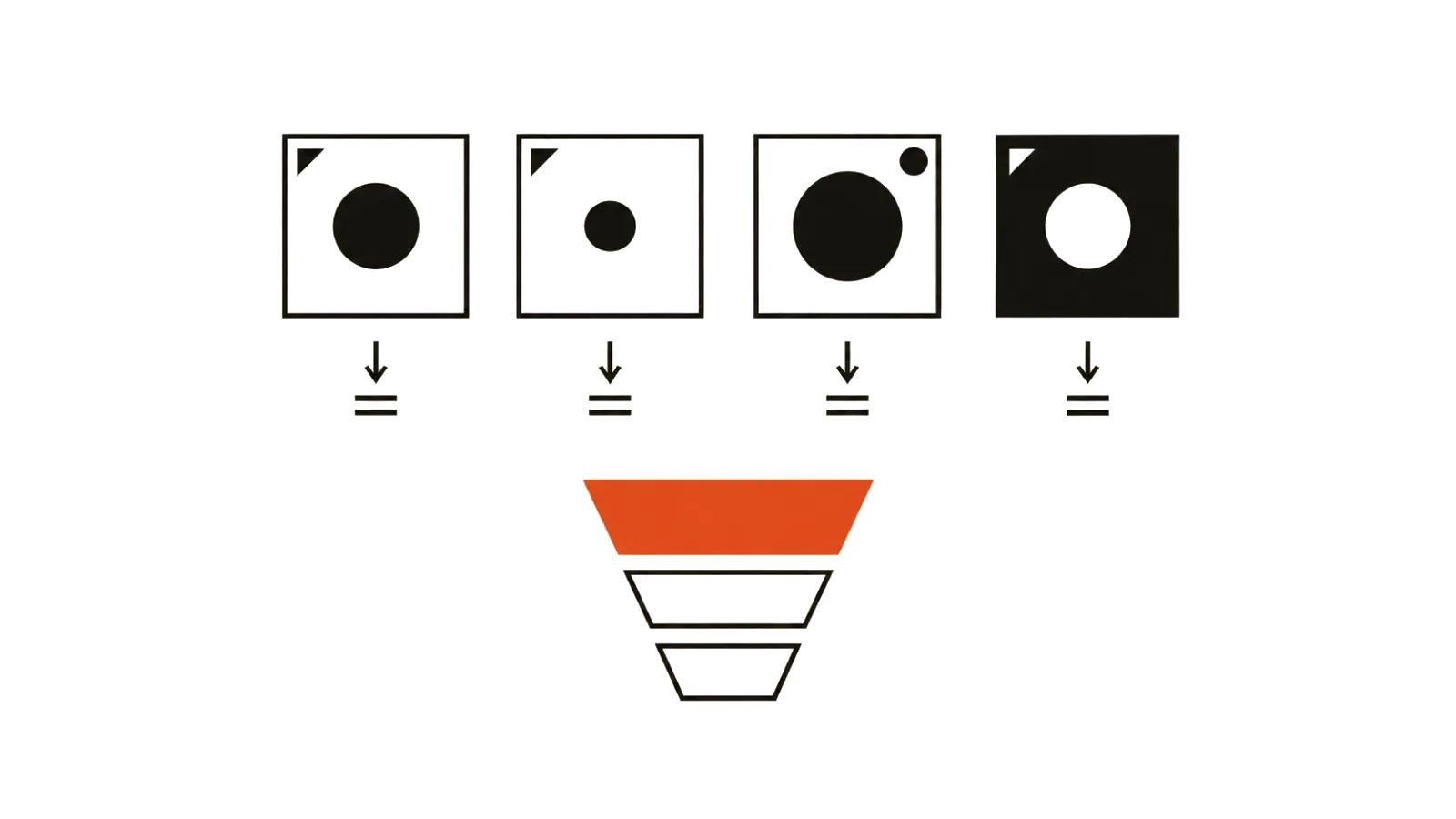
Video formats that work
Direct demonstration. The product in frame, large, doing something legible: pouring, applying, opening. It works where the properties matter — texture, shine, size, speed.
Before and after. Problem and result in one frame or one cut. It demands honesty: exaggerate the result and the creative buys clicks plus refunds.
Testimonial or talking head. A real person or a synthetic presenter delivers a short script. The format's strength is intonation; its weakness is that fake reads as fake immediately.
Scripted scene. A mini-story with a character: conflict, line, turn. The most expensive format and the one most dependent on performance.
Fast-cut montage. Quick edits, on-screen text, momentum. Cheaper than shooting and faster to burn out than anything else, because the device becomes familiar quickly.
What makes a creative work
Clarity. Within two seconds the viewer knows what is being advertised. If that requires reading the caption, the creative has already lost.
One idea. A single benefit, shown literally. The "cheaper, faster, better quality" formula dilutes the message: nobody remembers any of the three promises.
Believability. People recognize exaggeration and stop trusting everything else on screen. A small real detail — actual texture, actual sound — holds credibility better than any slogan.
Fit with the placement. A vertical screen wants a different composition: subject centered, larger objects, text inside the safe area. A horizontal creative cropped to vertical loses the visual center that made it work.
Testing without fooling yourself
Change one element at a time. If a new version differs in first frame, copy, and music, the result cannot be attributed to any of them.
A workable sequence runs in three waves. First: three to five distinct ideas in one format. Second: the winning idea in three executions — different opening frame, different length, different voice. Third: scale the winner into new audiences.
How many impressions a decision needs depends on budget, but the rule is simple: do not change a creative before the sample is large enough. Otherwise the decision is made on noise.
Video versioning fits this logic: instead of gaming a platform, it produces more variants of one creative — different thumbnails, intros, shot order. Each version collects its own statistics, and the numbers show what actually worked.
Creative fatigue
Every creative stops working eventually. People memorize it and stop noticing, while the delivery audience thins out as the same viewers see the same ad too often.
The signals are simple: cost per result rises at constant reach, early-second retention falls, frequency per person climbs.
What helps. Refresh the opening frame while leaving the rest intact — often that is enough. Change the delivery: same idea in a different format. And keep inventory: five finished versions let you rotate without a production gap.
Mass vertical videos are built for exactly this: one format, many versions, quick replacement of a burned-out unit. Those are priced per view — $2.47 per 1,000 views (CPM).
Reading the numbers
Watch the chain rather than the view count: impression, early retention, click, action. A failure at any link points to its own problem.
Low retention means a weak first frame or a mismatched audience. Many clicks and few actions means the promise in the creative did not survive the landing page. Good retention with an expensive result means the creative is working on the wrong audience.
For video, look at the second where people leave. If the drop is at second three, the problem is delivery, not the product.
Compare creatives under comparable conditions: same budget, audience, and period. Otherwise the winner is simply the one that got more impressions, and the conclusion moves budget in the wrong direction.
Who needs this
Buyers who are tired of running one ad version. Creators who want to know which topics land. Anyone selling a visual product that has to be shown rather than described.
Handcrafted creative with frame-by-frame work matters where performance and precise facial expression carry the message: from $394 per video up to 90 seconds, about a week. Automated versions fit where volume and fast replacement matter more than a single polished piece.
Vertical video ads deserve their own conversation: there the creative lives inside a stream of entertainment and competes with whatever plays next. Worth remembering before the script gets approved — a slow open costs more than it looks.