AI video from script: the actual problem
The request usually hides a specific situation: the text exists, the video does not. The model produces something other than what was written, shots do not cut together, the voice misses the mouth. The cause is almost always the same — the script was written for an actor rather than a generator.
The difference is simple. You can write "he hesitates" for a performer and get hesitation. For a model you describe what is visible: close-up on the face, eyes moving off-camera, a two-second pause, then a hand reaching for the cup. Anything that cannot be shown has to be cut or rewritten.
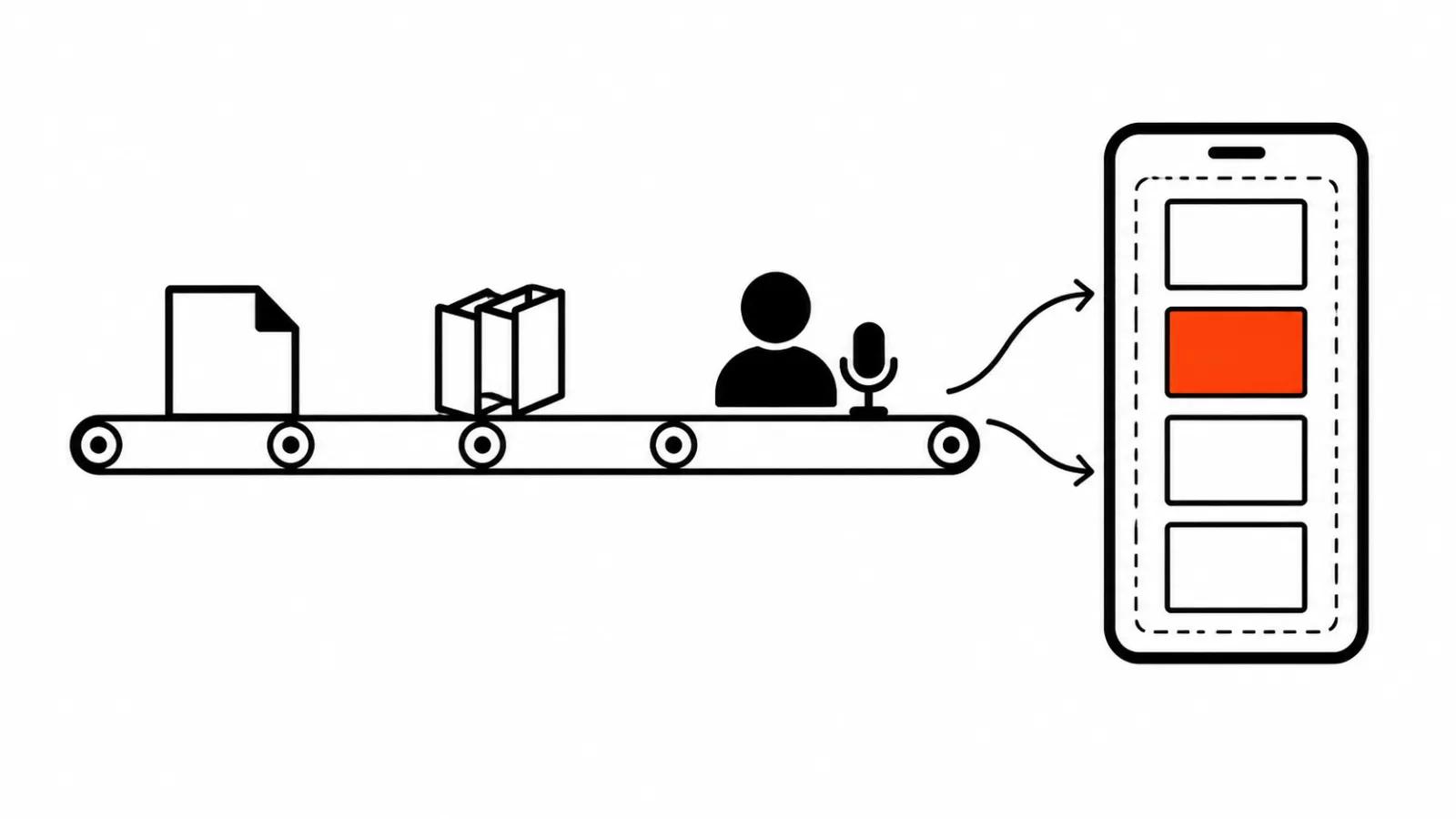
What follows is the working sequence: script, shot list, prompts per shot, voiceover, assembly. Each step can be done at different levels of detail, but none can be skipped — an error early on multiplies through everything after it.
Writing for a generator
Four blocks carry a short video. The hook: three seconds in which the viewer decides to stay. For generated footage, build the hook on movement and an object rather than a line of dialogue — models reproduce motion more reliably than nuanced performance.
The point: one idea per video. Two ideas means the viewer remembers none.
The proof: what shows the claim is true. The product in hand, a number on screen, a process seen from inside.
The action: what to do next. Visit, message, try.
Timing comes from speech rate, roughly 2 to 2.5 words per second. A 60-second video is 120 to 150 words, and staying near 130 leaves room for pauses.
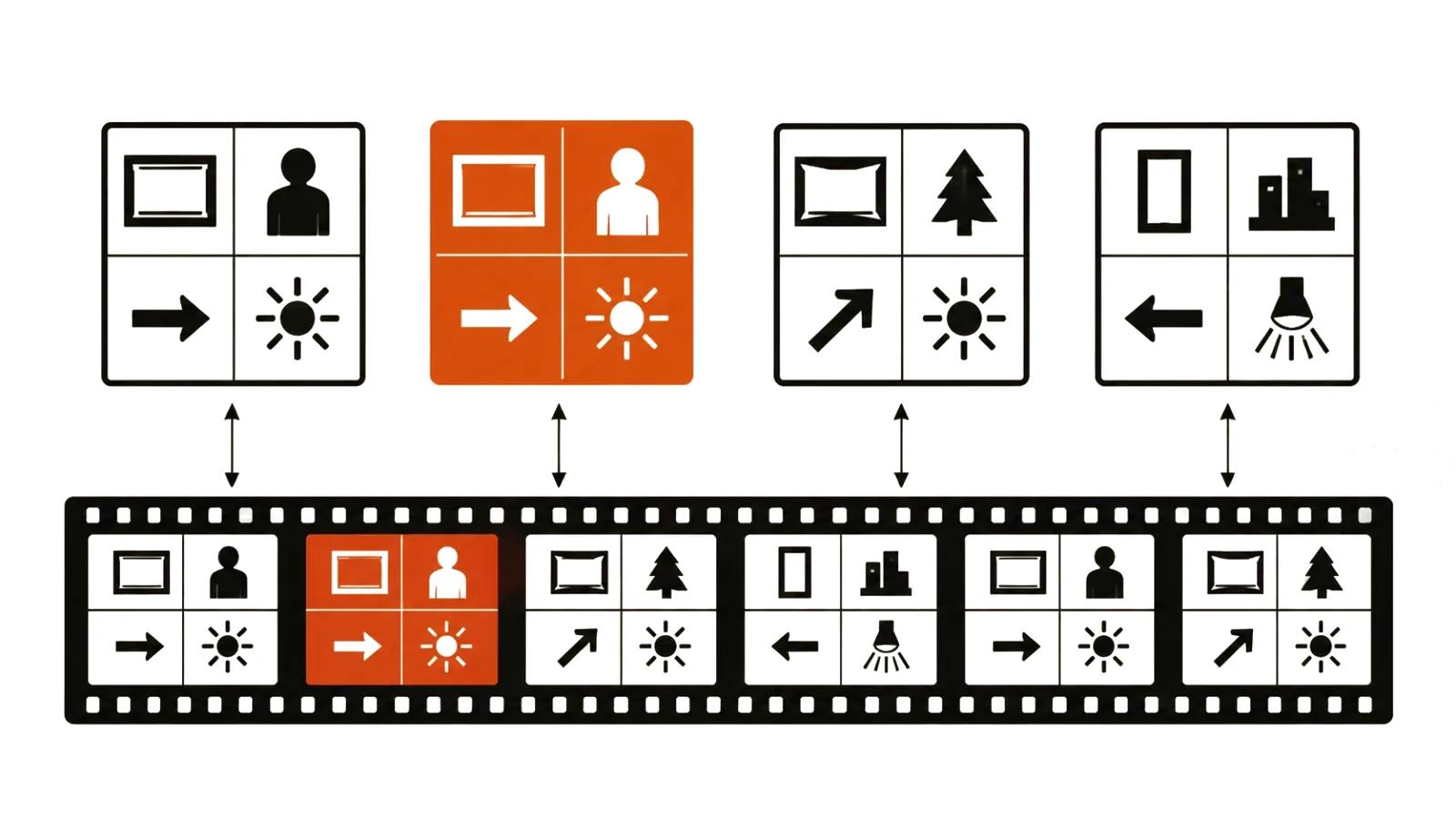
The shot list
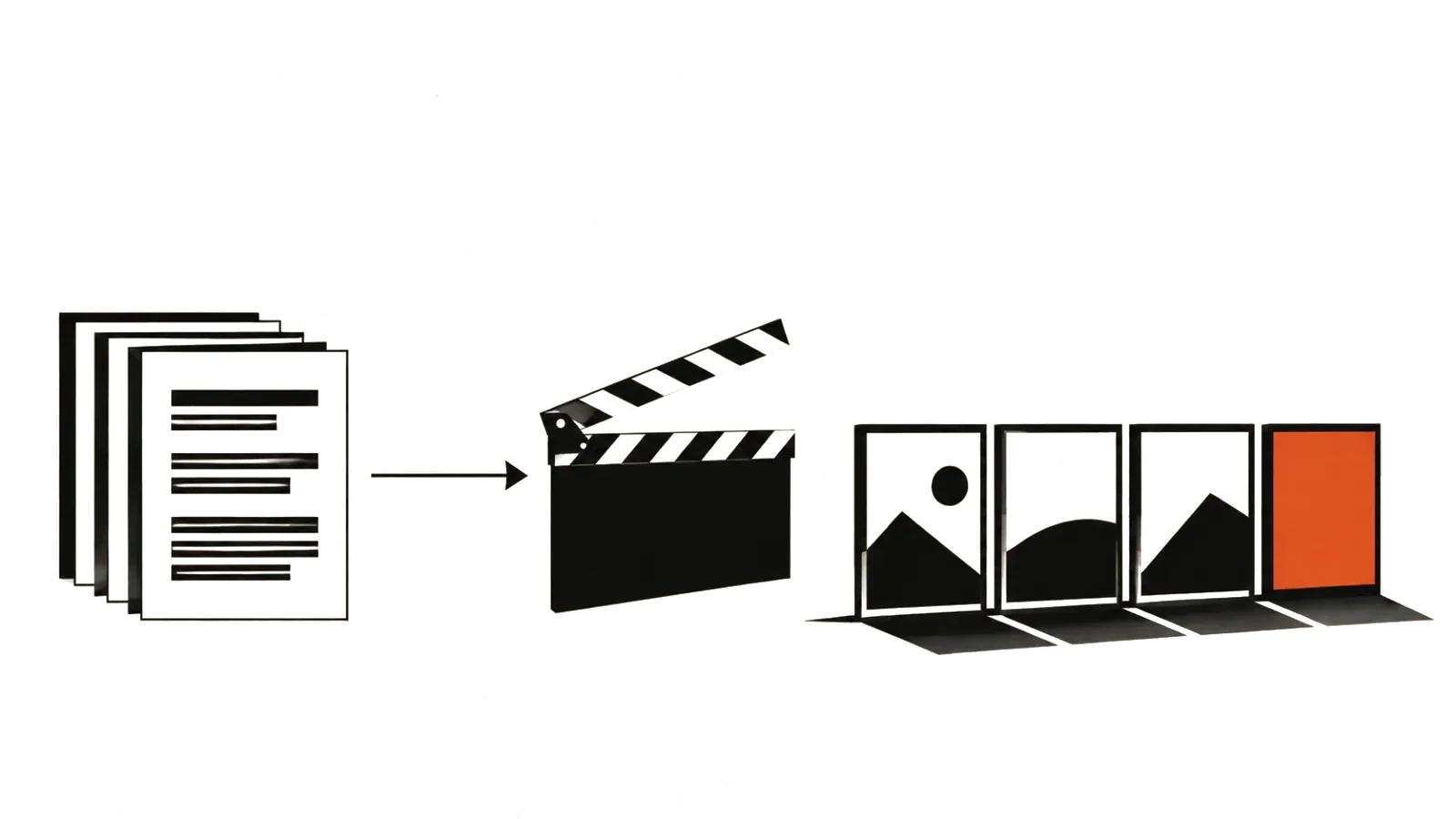
A shot list converts sentences into shots: number, duration, what is in frame, what the voice says, what moves.
The rule is one shot per action. If a sentence contains two actions — "picks up the phone and walks outside" — that is two shots, because a model will not move between locations inside a single frame.
Shot length for generation is typically three to five seconds. Shorter is harder to cut smoothly; longer starts to drift, with backgrounds changing and objects deforming.
This is also where the script meets reality. A crowd scene, an elaborate handshake, a precise on-screen label — each is a candidate for substitution: a wider shot instead of a close-up, a hand in frame instead of a face, a caption over the video instead of text inside it.
Prompts per shot
A prompt is written per shot and holds four things: shot size, subject and action, camera movement, and the light and style. Anything repeated is copied verbatim, which is what makes separate renders look like one shoot.
The logic looks like this: "medium shot, a woman in a light shirt sets a cup on a table, camera pushes in slowly, soft daylight from a window on the left, warm tones." That prompt does not describe a mood; it describes what is visible.
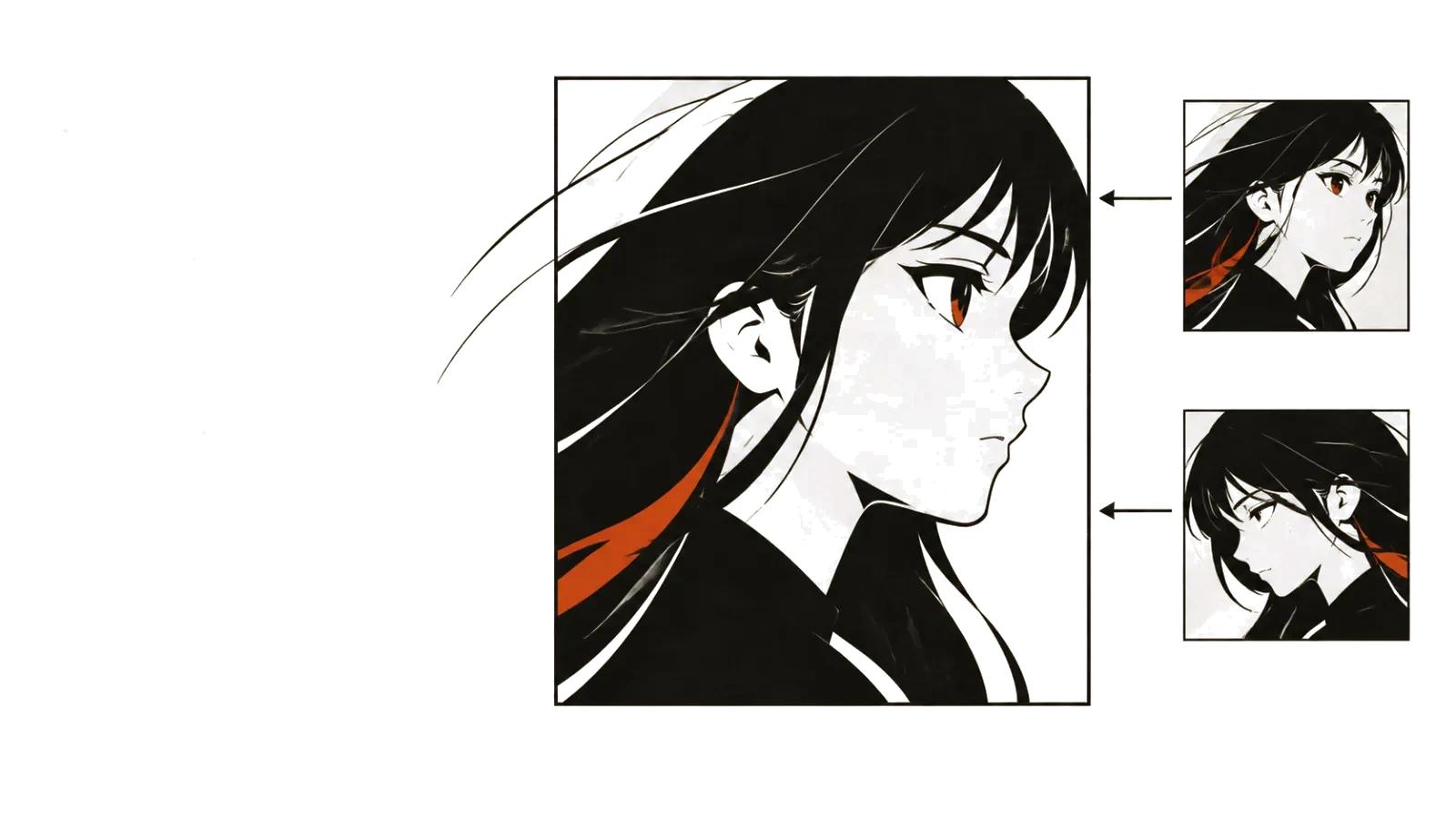
Techniques that save generations. Use a character reference instead of describing a face. Use the last frame of the previous shot as the start of the next to continue movement. Generate background and subject separately when a scene is complex. Add a negative prompt for the usual artifacts: extra fingers, garbled text, blur.
AI video production almost always runs from a shot list. Without one, prompts are written by feel and the result is a set of unrelated fragments.
Voiceover and timing
Voice is synthesized from the final text, never a draft: any edit after recording breaks the timing of every shot. So the script is approved before the microphone — or the model — starts.
Scripts get rewritten for synthesis: short sentences, periods instead of commas, numbers spelled out, pauses marked explicitly. Models read evenly, and where a person would breathe, a model simply continues.
Then there are two routes. Record the whole voice track and fit the video to it. Or generate shots against pre-cut audio segments of three to five seconds each. The second is more precise and requires splitting the text by shot at the script stage.
There is a separate piece on AI voiceover covering intonation, stress, and the usual synthesis failures.
Assembly
Assembly starts with a rough cut: selected takes laid out in shot-list order, no effects, no transitions. This is where rhythm shows itself — if you want to speed up halfway through, a shot is running long.
Then color. Different renders come back with different balance, and without correction the seams show immediately.
Then sound: music, accents, ambience. And titles — all on-screen type is added in the edit, because models almost always corrupt text inside a frame.
The last step is versioning for each placement: vertical, horizontal, square. Composition is rebuilt per format rather than cropped mechanically.
Time and cost
A handcrafted video up to 90 seconds starts at $394, with about a week of turnaround. That includes script, shot list, selection of generations, voiceover, edit, and music.
A stream of template-based videos is priced differently: $2.47 per 1,000 views (CPM). That is the mass format, where the script is written once and the intros, numbers, and thumbnails change.
Revisions deserve their own line. Changing text is nearly free; changing a finished shot costs a new generation and a new edit.
Mistakes that break the cut
A script written like an article: long paragraphs, complex clauses, metaphors. A model cannot perform a metaphor, only show an object.
Trying to generate everything from one prompt. One prompt, one shot; the rest falls apart.
Skipping the shot list. Without it, the video is assembled from whatever happened to work, and the script stops controlling the result.
Ignoring sound. Even flawless footage with flat voiceover reads as a technical demo.
Direction is still required at the seam between meaning and image. A model does not know what matters to your audience and cannot tell a joke from a mistake.
That is exactly what separates handcrafted videos: every frame is reviewed, a single movement can take up to a hundred generations, and the edit and music are built around meaning. In automated formats the same outcome comes from volume — a hundred versions, of which ten work.