What shipped on October 17
At 08:35 UTC on October 17, 2026, DeepSeek announced on X: "DeepSeek-V4.1-Flash-1017 is here!" The post promises better benchmarks, faster task completion, shorter responses, and calls the result a "Pareto improvement in performance and cost." The model is available on the company's site, in its app and through the API, with stated optimization for DeepSeek Harness, Tencent CodeBuddy and WorkBuddy.
In the same thread, the team added a detail that matters here: the model is trained with RL and self-feedback for end-to-end project building — "from game creation to 3D modeling." Weights are open on Hugging Face and ModelScope. A Search & Fetch API was opened at $0.75 per 1,000 calls per endpoint.
Why a coding model entered a conversation about video
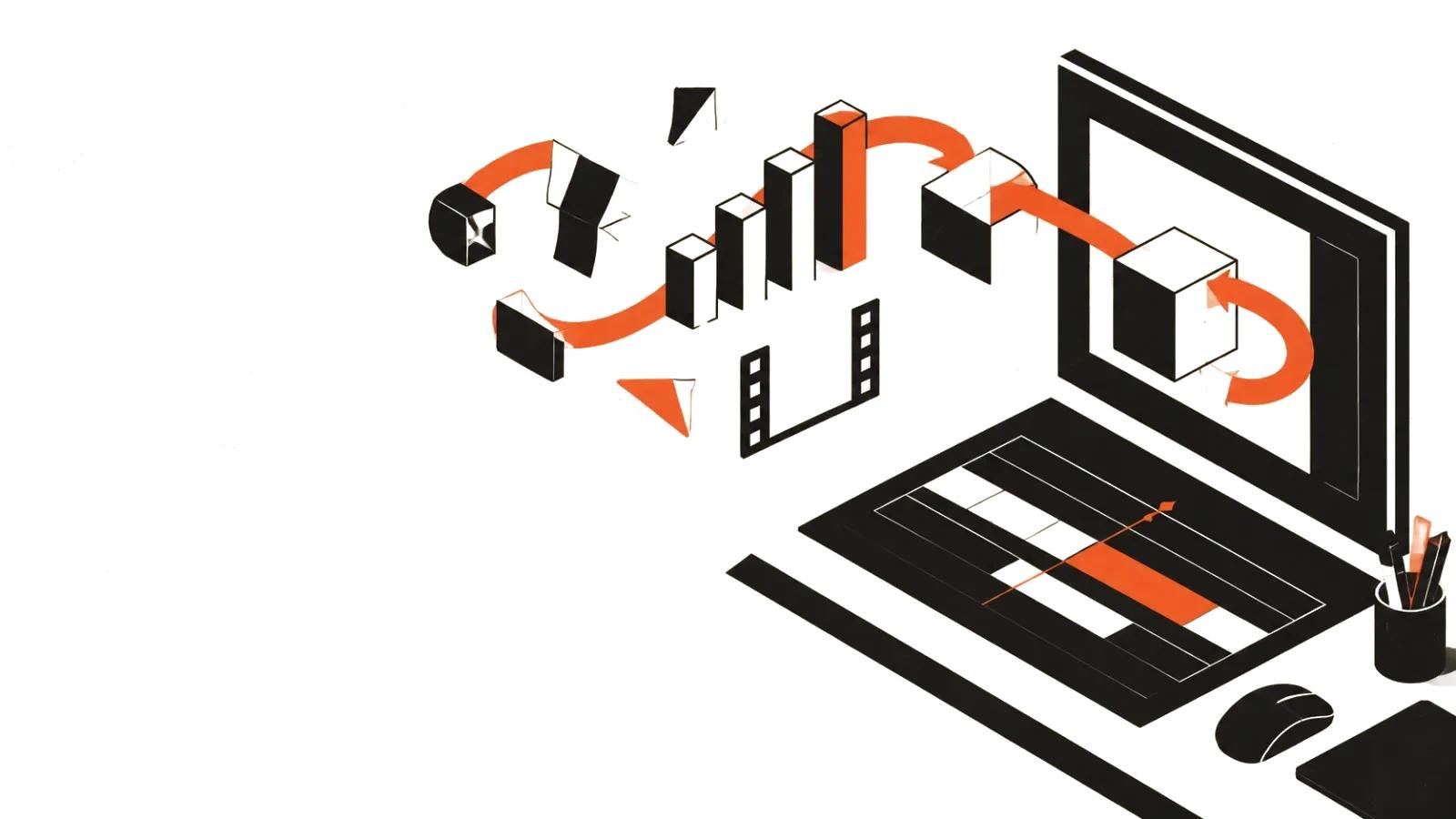
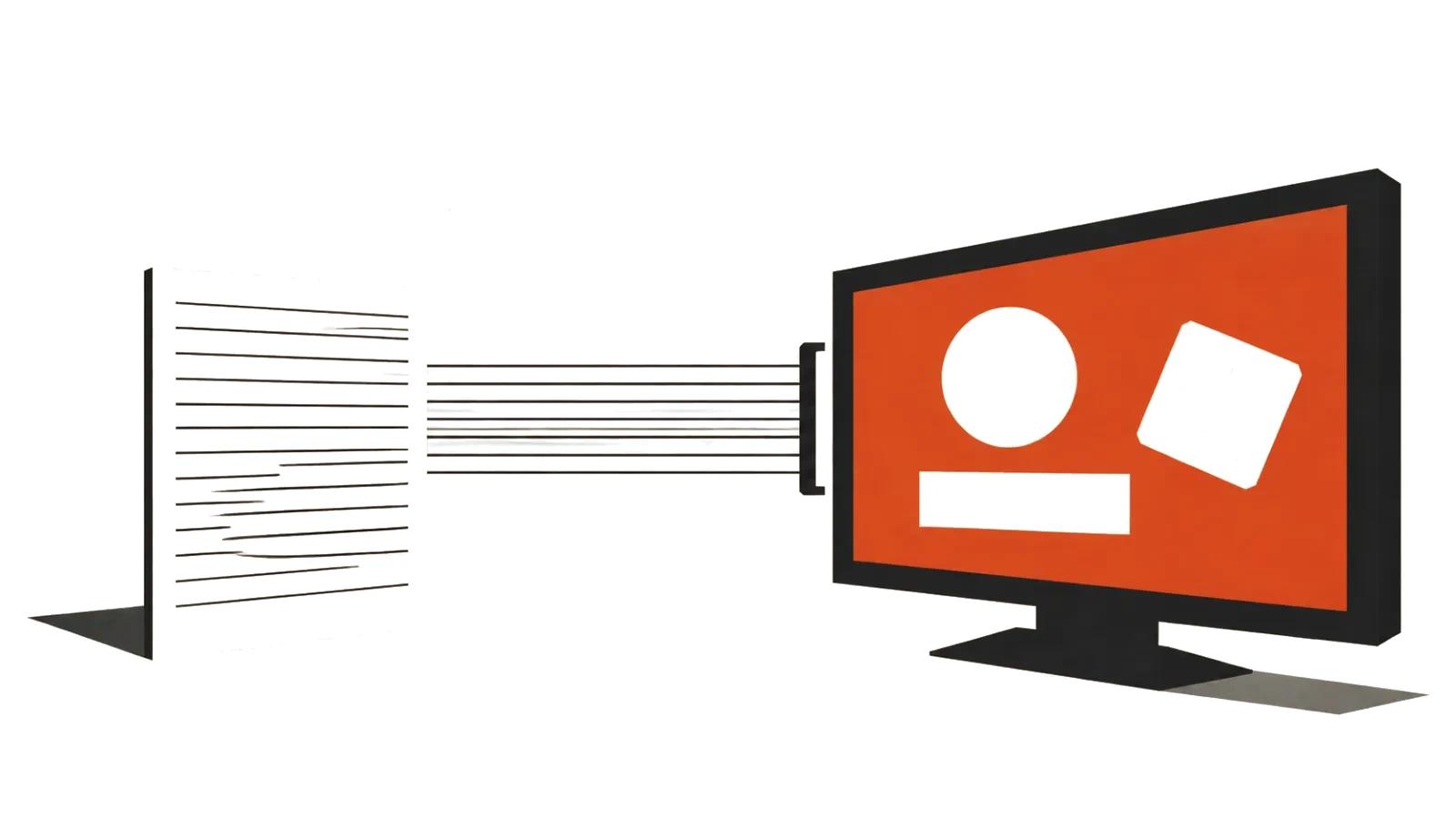
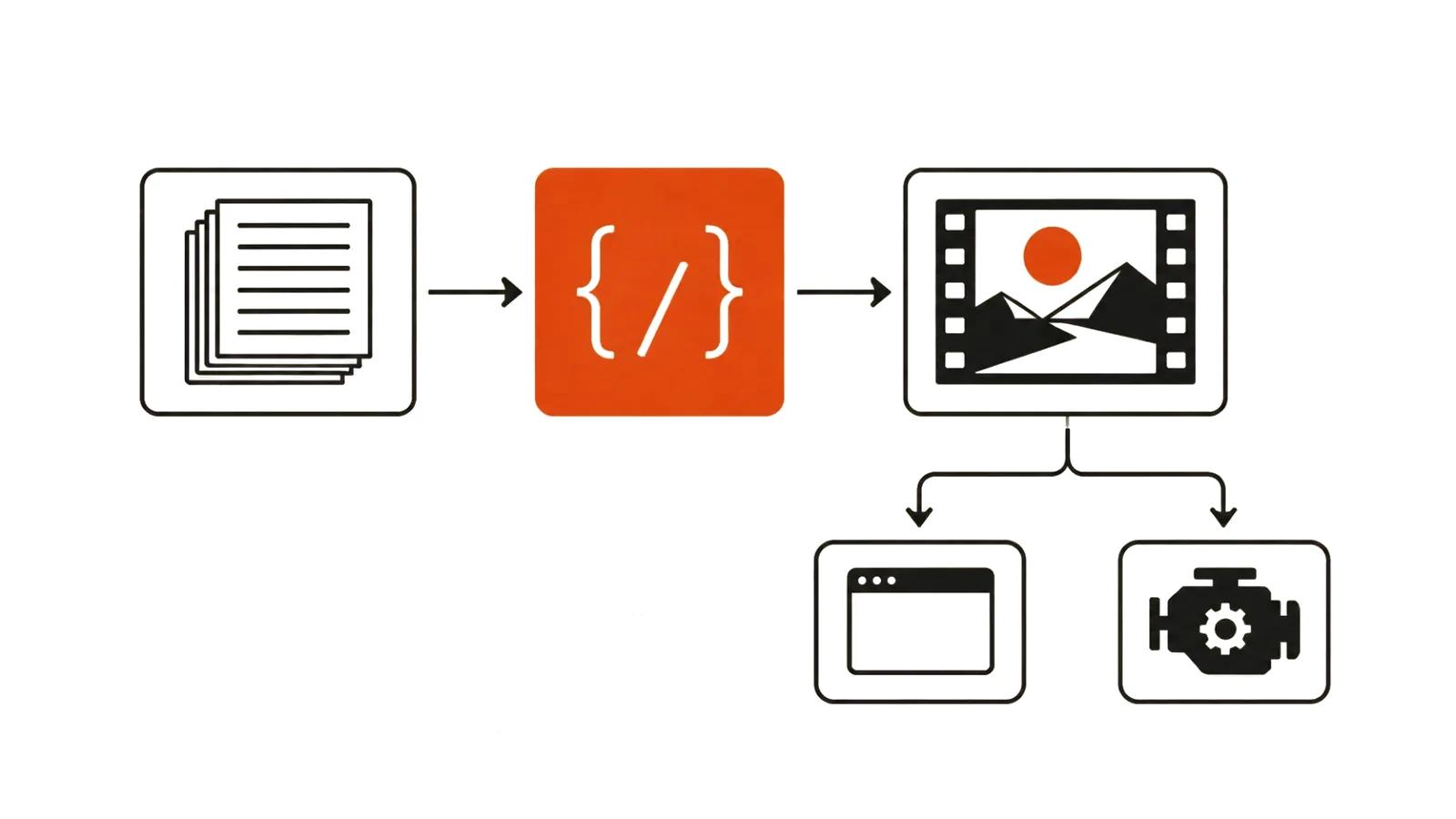
The approach is called code-to-video: the model writes animation code — HTML, CSS, JS, 3D scenes — and that code renders into a finished clip. The output is a described, then rendered scene rather than a generated frame.
What this covers in practice:
The main difference from generative video is control. Code can be opened, edited, re-rendered, and it returns a predictable result: the same frame with one detail fixed. The traditional pipeline for this is After Effects and manual animation; here the same layer of work is being handed to a model that writes the scene code.
If you look at AI video production as a whole, code-to-video sits alongside other approaches and handles its own slice: work that needs controlled design and repeatability.
- motion design: titles, transitions, animated lower thirds;
- interfaces and product screens: element animation, walkthroughs of use cases;
- infographics and data: charts, counters, diagrams in motion;
- product launches: short presentation pieces where clean typography and pacing matter more than photorealism.
What Higgsfield showed
Higgsfield's official account (@higgsfield_ai) posted a run of comparisons on October 17 between 16:32 and 20:32 UTC, all built on its platform. The headline line came at 16:46 UTC: "DeepSeek V4.1 Flash looks like the new SOTA for motion design" — roughly 1.4k likes.
What the run included:
One caveat: these are the platform's own demos, and they are not an independent benchmark. Such tests carry bias, both in task selection and in the fact that only good results get published. Read them as a demonstration of what one platform can do, not as a measurement.
- at 16:32 UTC, a launch video "with actual art direction… 3D, halftone, and pixel art";
- comparisons against Claude Opus 5.5: 3D modeling, water simulation, a "floating island" scene;
- comparisons against Gemini 4 Argon: ink animation, a "flying car kickflip";
- at 18:34 UTC, an animation test across four models: Gemini 4 Argon versus GPT-6.1 Soul, Claude Opus 5.5 and DeepSeek V4.1 Flash.
What the changelog says
DeepSeek's documentation (api-docs.deepseek.com/updates, entry dated October 17, 2026) states that the API call and its price are unchanged, with the model served as deepseek-flash. It also lists numbers: DeepSWE v1.1 — 77.0; Terminal-Bench 4.0 — 42.3; HLE without tools — 42.6. Task execution time and output length are both reduced.
Those are the only figures in this story worth treating as measurement. The rest is marketing language or demo material.
One user's opinion
A user posting as @bourneliu66 (October 17, 16:30 UTC) said the model is "very strong" for video-via-code and "only second to Claude Opus." That is one user's opinion, not a test result. Claims about how the weights were produced are not repeated here, since nothing backs them.
Where code-to-video fits, and where it does not
The split is simple and follows from what has to be in the frame.
The practical combination: the design layer of vertical video ads gets built in code — cards, numbers, transitions — while live scenes come from generation or from set. Our pricing benchmarks have not moved: a handcrafted video of up to 90 seconds with script development and editing starts at $394, and mass formats are priced per view — from $2.47 CPM (per 1,000 views).
- It fits: design graphics, interfaces, infographics, titles, launches. Anything expressible as rules and built from vector elements and 3D scenes.
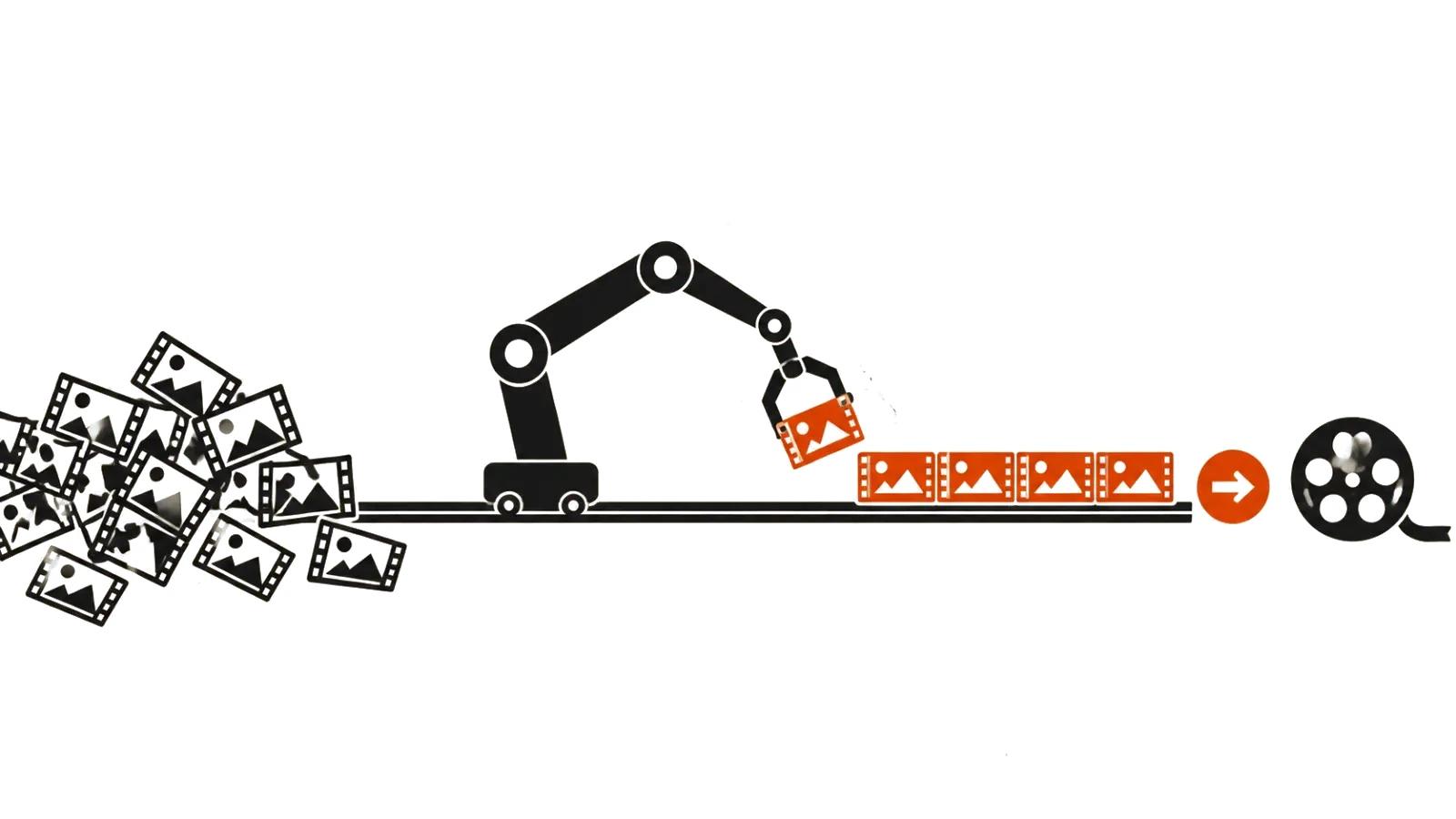
- It fits volume: templated video built from one structure. When you need a run of mass vertical videos with the same layout and different content, code-driven animation gives cheap repeatability — the scene rebuilds without a shoot and without manual frame-by-frame work.
- It does not replace video generators: Kling, Seedance, Veo and similar models are still what you reach for when people, complex camera work, natural light and physical detail are in frame.
- It does not replace filming: dialogue, facial performance and product photography are not drawn by code.
What to check before adopting the approach
The stack: what renders the code — a browser or a dedicated engine. That decides both quality and build time.
- Repeatability: build the same frame twice. If the result is stable, the template can scale.
- Fonts and licenses: graphic assets and typefaces carry rights, exactly like music and stock footage.
- Sharpness on vertical: small captions and hairline strokes need a separate check on a phone.
- Where the human enters: edits in code are cheaper than edits in generated footage, so use that as your review loop.
- Check what is current: the fastest route is a guide to AI video models 2026, which also shows which model fits which scenario.