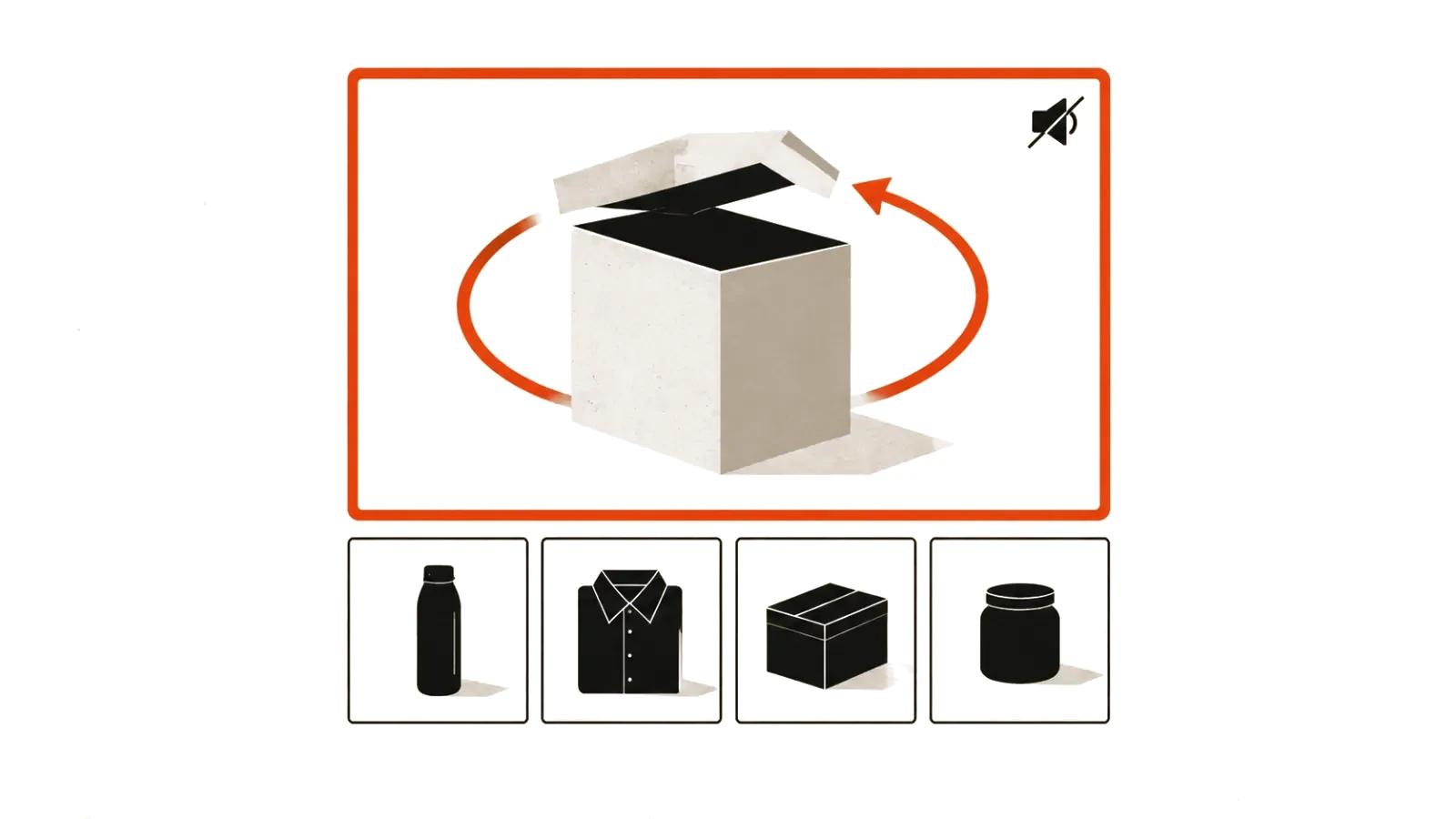
What rich content means on a marketplace
The idea is the same everywhere, the names differ. On Amazon it is A+ Content: a tool for adding videos, enhanced images, custom text placements and comparison charts to product detail pages, in Amazon's own description. On Kaufland it ships as rich content, assembled from blocks, one of which is a full-width video. Newegg markets A+ Content with video for product highlights and tutorials.
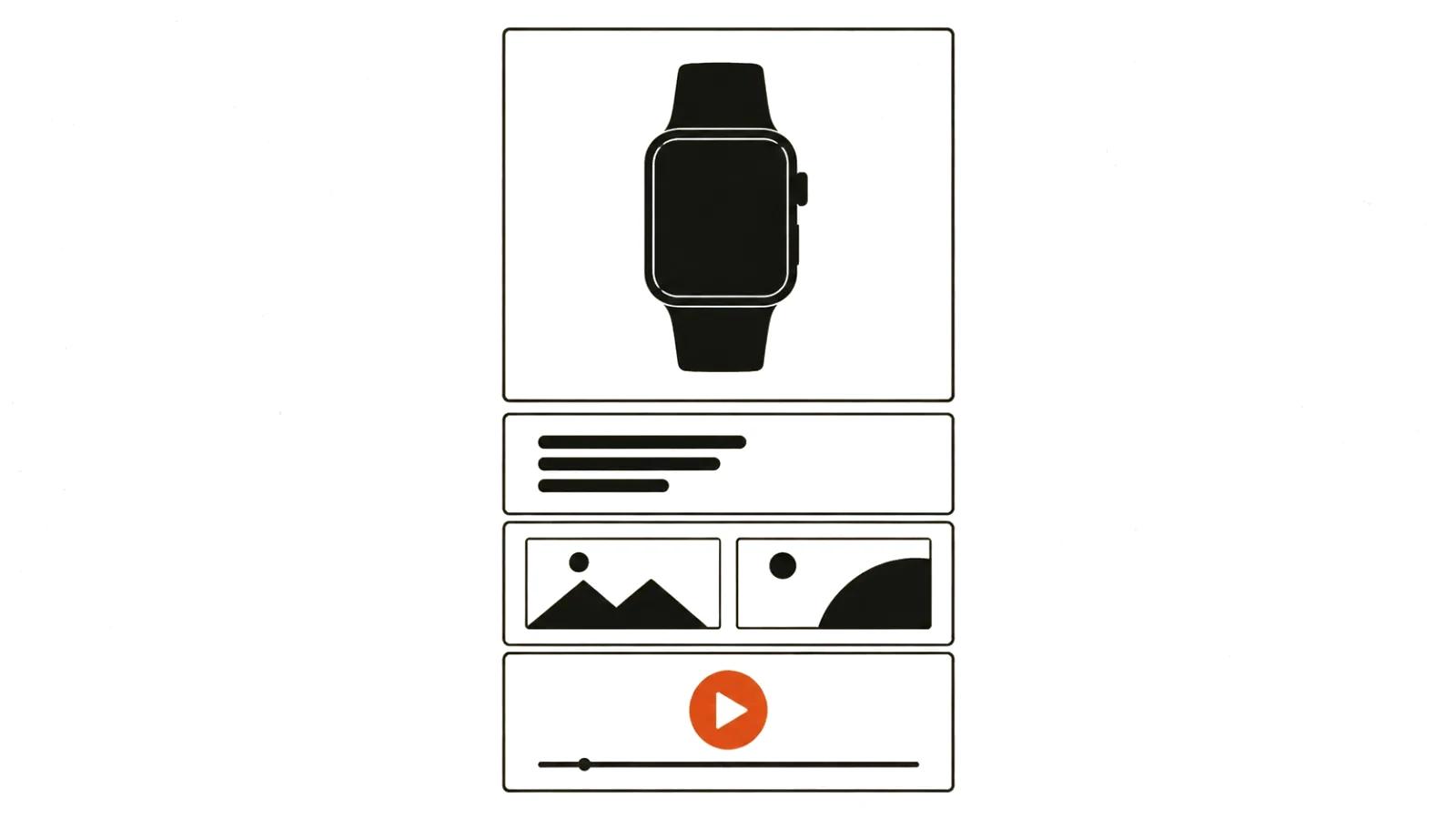
The common structure is a stack of modules below the main description, built in the seller portal with no code and no designer. You write, upload and arrange.
Worth stating what rich content is not. It does not replace the main image, it does not replace reviews, and it is not a landing page. It is a layer inside the listing, with its own review process.
What sits inside a module
The module set decides how you shoot, so read it before the camera comes out.
Amazon splits the tool in three. Basic covers images, text placements and comparison charts. Premium adds larger images, videos, interactive hotspots, clickable image or video carousels and Q&A modules. Brand Story spreads one narrative across the catalogue. Access needs a Professional selling account and a role on a brand enrolled in Brand Registry.
Premium video limits, per Amazon's module guide: mp4 only, minimum resolution 960 by 540, maximum file size 200 MB, maximum length 180 seconds.
Kaufland documents similar ceilings for its video block: a public direct link to an mp4, up to 200 MB, minimum 320 by 240, maximum 4096 by 4096, up to 180 seconds, 15 to 120 frames per second. Subtitles are generated automatically when the video contains speech. Its own advice is to keep videos short, because viewers watch only a small part.
Rules that get submissions rejected
This is the part that costs sellers a week per attempt. Marketplaces reject modules for content reasons, and the reasons repeat.
Kaufland's best-practice note asks for the product shown in a real environment. Amazon's seller guide warns that submissions can be rejected, which delays publishing. Newegg positions its A+ section as a branded overview, which tells you the tone: informative, on-brand, no hard sell.
The practical consequence is that a social ad rarely transfers. Ads carry price flashes, calls to action and comparison claims, and moderation treats those as reasons to refuse. Rich content video gets shot for the listing: the product, hands, process, texture.
Why video earns its place
A shopper in a listing answers three questions. Will it fit. What does it look like in real life. Will it fall apart in a month.
Photos answer the first partly and the second barely. Video answers all three when it shows the product working: how it opens, how it mounts, what is inside, how heavy it feels.
Marketplace research on the effect exists, and it is worth treating carefully. The claims that circulate are platform marketing, published without methodology, so they tell you what the platform wants sellers to do. They do not tell you the size of the lift on your category. The craft side, framing and length, is covered in the guide to AI video for product pages.
What a catalogue actually costs
Here the arithmetic gets uncomfortable.
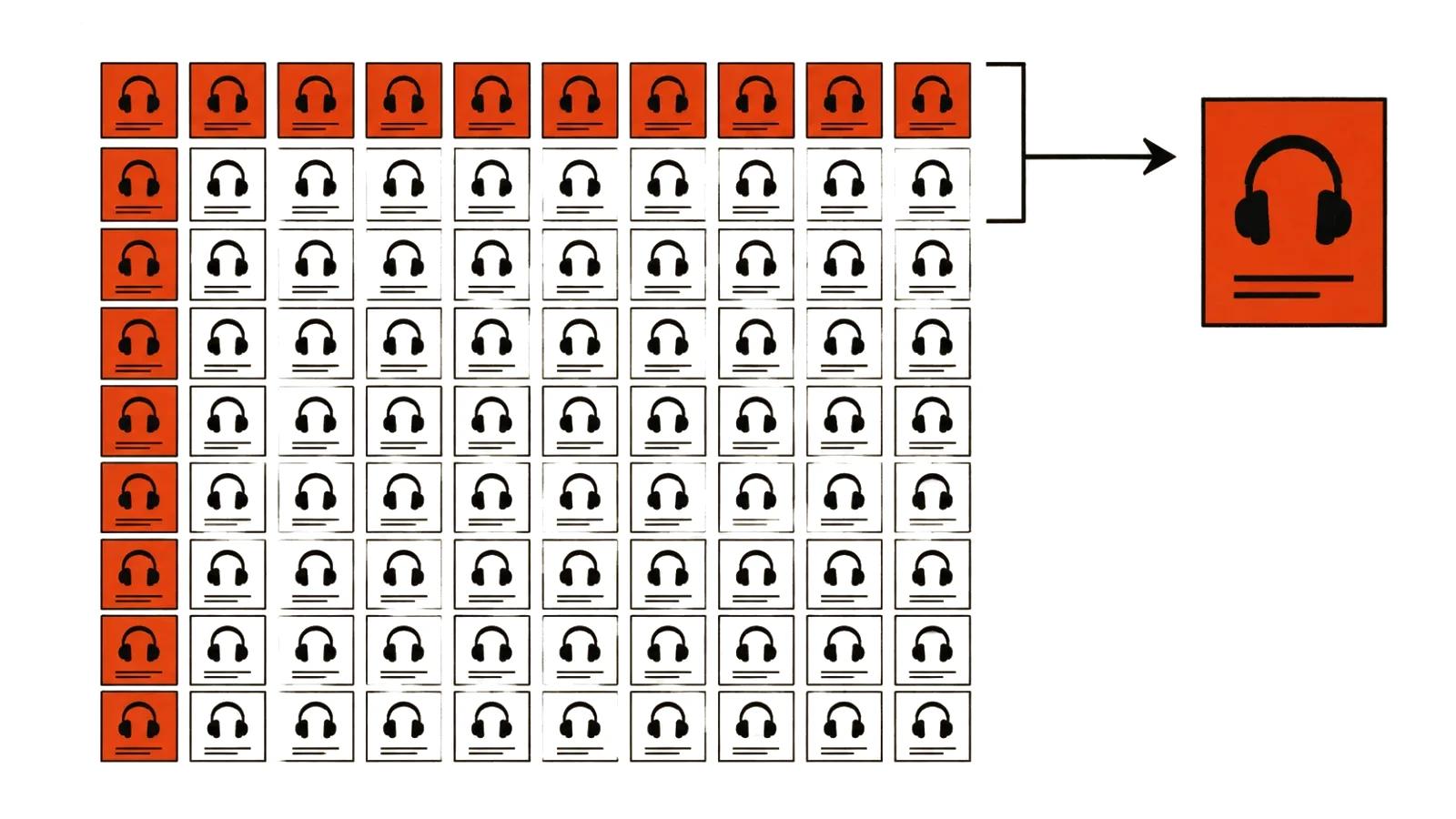
A handcrafted video starts at $394 per clip up to 90 seconds. Multiply by listings. Fifty listings is $19,700. Two hundred listings is $78,800. A catalogue with a thousand SKUs does not survive that model.
Volume formats price differently: up to $2.47 per 1000 views. A hundred thousand views is $247. That buys reach in feeds, and reach is a different job from explaining one product in detail.
There is a middle path, and most catalogues end up there. Split the range: ten hero products get a handcrafted shoot, the rest gets assembled from a small library of reusable scenes with the product dropped in. That layer stays affordable thanks to short-form video at scale, while manual work stays where precision matters.
One cost people forget is refresh. Packaging changes, accessories change, the manual changes, and the video goes stale. Budget for a rebuild cycle, or half the catalogue will show last year's version. If the layer sounds like too much internal work, AI video production as a service covers the shoot and the edit.
Where video does not pay
Half a catalogue does fine without video, and saying so is part of the job.
Skip the video when products differ by one attribute: colour, size, flavour. Skip it when buyers already know the item and come for the price. Skip it when the only available angle sits close to a rejection: prices on screen, side-by-side claims against a competitor, promises about outcomes.
My test: if the video answers the question that appears most often in reviews, it earns its place. If it only looks handsome, it is decoration with a file size.